We work on most residential sprinkler systems and understand the local conditions that shape watering needs across the Houston area.

Sprinkler Repair
We work on most residential sprinkler systems and understand the local conditions that shape watering needs across the Houston area.
Call us today to lock in your savings.
Opt into our text messaging system to begin scheduling your service!
In Houston, sprinkler problems do not always show up as a dry lawn right away. Sometimes the first sign is the opposite. Water starts collecting near a bed, a patch of grass stays soggy for too long, or one zone seems to be running fine but leaves a muddy area behind. Other times, part of the yard starts thinning out because the system is no longer covering evenly. Either way, once irrigation falls out of balance, the landscape usually tells on it.
We provide sprinkler and irrigation repair in Houston, TX for homeowners and light commercial properties that need the system working properly again. Our team handles leaking pipes, broken heads, stuck valves, timer problems, wiring issues, poor coverage, and pressure-related sprinkler failures. In a climate like Houston’s, where heat, humidity, and heavy rainfall can all affect how water moves through a property, irrigation repair is not just about replacing parts. It is also about making sure the system is watering the yard sensibly.
We serve Houston and nearby communities including Katy, Sugar Land, Pearland, Cypress, and surrounding areas.
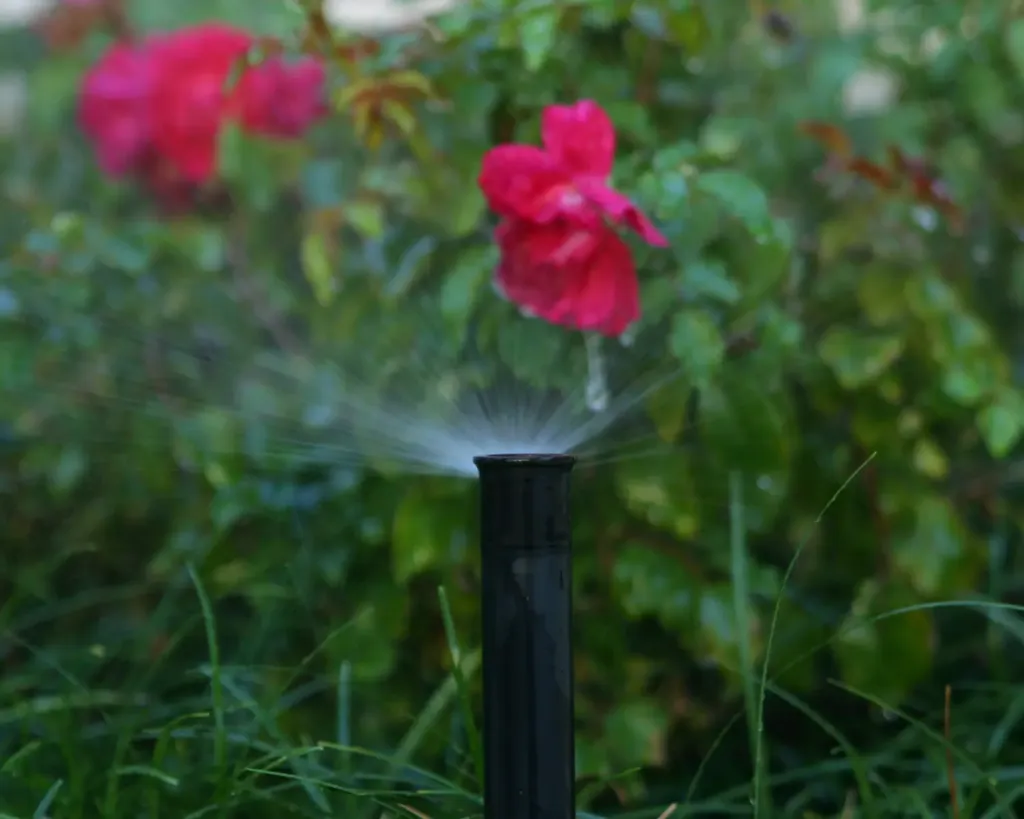
Sprinkler systems break down in different ways. Some issues are obvious the moment a zone turns on. Others stay hidden until the lawn changes color, the soil stays wet too long, or the schedule starts behaving unpredictably.
Broken heads are one of the most common reasons a yard starts watering unevenly. They can crack from mower contact, shift from foot traffic, wear out with age, or stop operating correctly after repeated use.
You might notice a head spraying the driveway, one area getting flooded, or a sprinkler that never rises the way it used to. In some cases, the damage looks small but still changes the entire watering pattern for that zone.
A leaking line can waste water quietly for a long time, especially if the damage is underground. Pipe cracks, root pressure, worn fittings, and shifting soil are all common reasons this happens.
Typical signs include wet areas that seem to linger, bubbling ground during a cycle, muddy spots, or an unexpected jump in the water bill. In Houston, where rainfall can already leave the ground saturated, a hidden irrigation leak can be easy to overlook at first.
When a valve stops opening or closing the way it should, the whole zone becomes unreliable. Some valves stay open too long. Others stop activating altogether.
That can mean a section of the lawn keeps running after the rest of the system has shut off, or one area never gets watered at all. Valve issues can also create strange timing problems that make the controller seem like the issue when it is not.
Low pressure changes how water is distributed, even when the system still appears to be running. Heads may not pop up fully, spray may look weak, and portions of the yard may stop receiving enough coverage.
This can be caused by leaks, clogs, damaged valves, pressure regulation trouble, or backflow issues. In Houston, low pressure can be especially frustrating because the system may seem active while the lawn still declines from uneven watering.
Sometimes the yard hardware is fine and the controller is the real source of the problem. The system may run at the wrong hour, skip a zone, repeat a cycle, or stop following the schedule altogether.
That can happen because of wiring faults, electrical interruptions, bad programming, or older timer equipment that is starting to fail. In a humid and rainy region, controller issues are important to catch because overwatering can become just as harmful as underwatering.
 We repair many of the parts that affect how an irrigation system performs, including:
Sprinkler heads and nozzles
PVC irrigation pipes
Drip irrigation tubing
Solenoid valves
Manifolds
Backflow preventers
Rain sensors
Smart irrigation controllers
Sprinkler timers
Wire connections
Pump systems
Water pressure regulators
We repair many of the parts that affect how an irrigation system performs, including:
Sprinkler heads and nozzles
PVC irrigation pipes
Drip irrigation tubing
Solenoid valves
Manifolds
Backflow preventers
Rain sensors
Smart irrigation controllers
Sprinkler timers
Wire connections
Pump systems
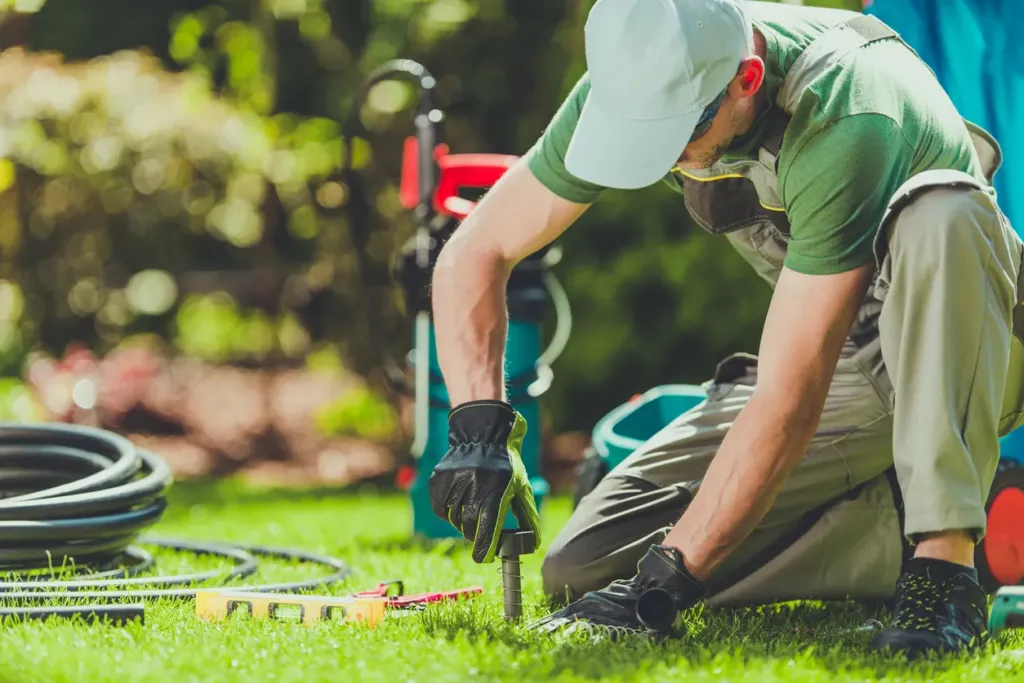
Water pressure regulatorsMost homeowners are not looking for a complicated service visit. They want somebody to identify the issue, fix what needs to be fixed, and make sure the sprinkler system is actually working better before leaving.
Step
1
Irrigation System Inspection
We begin by checking the sprinkler system as it runs. That gives us a clear look at the zones, spray pattern, valve behavior, visible piping, and controller settings.
Step
2
Diagnose the Problem
Once the system is active, we narrow down what is causing the failure. That may be a broken head, line leak, weak pressure, valve problem, wiring issue, or more than one smaller problem affecting the same zone.
Step
3
Repair or Replace Components
After identifying the issue, we repair usable parts where possible and replace components that are too damaged or worn out to keep doing the job.
Step
4
System Optimization
When the main repair is complete, we make practical adjustments to improve overall performance. That may include correcting spray direction, reducing overspray, improving spacing, and helping the system water more evenly.
Step
5
System Testing
Before finishing the visit, we run the system again to make sure the repair solved the original issue and that the affected zones are operating more consistently.
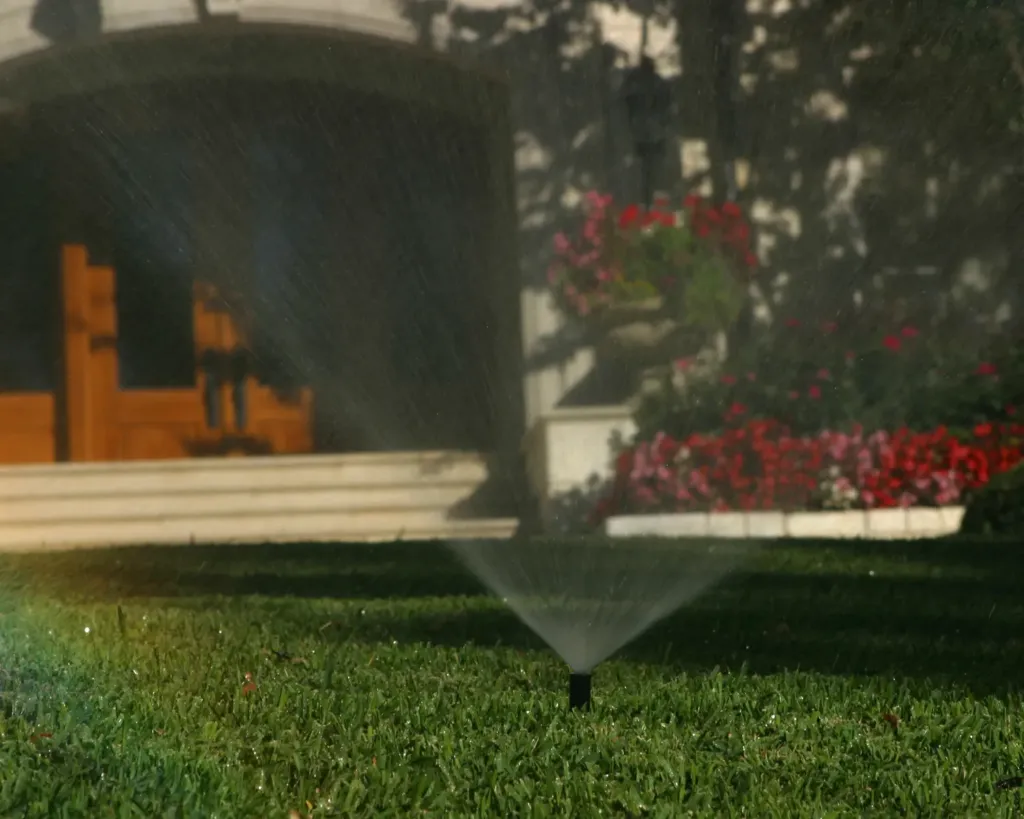
Sprinkler systems in Houston should not stay on the same settings all year. Weather shifts too much for that, especially with the mix of heat, humidity, and heavy rain events.
We also help with related irrigation work, including:
Sprinkler system inspections
Sprinkler system tune-ups
Drip irrigation installation
Irrigation rerouting
Smart irrigation controller upgrades
Water efficiency audits
Seasonal maintenance plans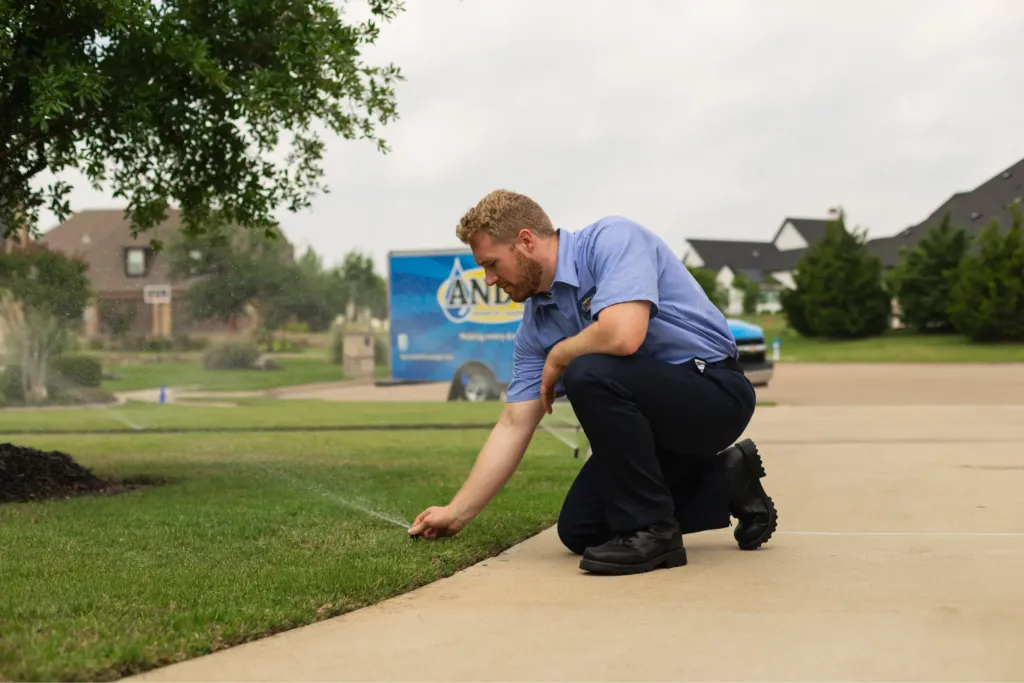
That depends on what is actually wrong with the system. A single broken head is usually much simpler than a leaking underground pipe, a bad valve, or a controller issue affecting multiple zones. The best way to understand cost is to inspect the system and identify the real source of the problem.
Many sprinkler repairs can be completed in one visit, especially when the problem is limited to one area or one damaged component. Larger issues may take longer if multiple zones are involved or the problem takes more troubleshooting to isolate.
Not always. It depends on access to the controller, shutoff valve, gate, and any areas of the property that may be locked. Some jobs can be completed with minimal homeowner involvement once access is available.
We repair most residential sprinkler systems and many light commercial setups, including spray heads, rotors, drip irrigation components, valves, timers, controllers, and related irrigation parts.
Once a year is a solid starting point for most properties. In Houston, many homeowners also benefit from seasonal checks because changing rainfall and long humid stretches can affect how efficiently the system should run.
If your sprinkler system is leaking, watering unevenly, leaving muddy spots, or failing to keep parts of the yard healthy, it may be time to have it inspected. A good repair can improve coverage, reduce wasted water, and help your landscape handle Houston weather more effectively. Schedule sprinkler and irrigation repair service in Houston, TX today.