
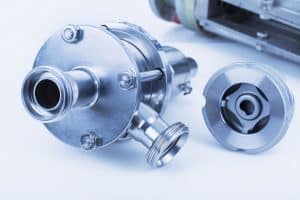
 Here in the South, we typically have mild winters. Still, if the worst-case scenario were to occur, such as the ground freezing over, then your above-ground backflow preventer – an integral part of any irrigation system – would be subject to considerable damage. If temperatures drop below freezing, any trapped water will freeze, expand, and cause the system to burst. Thankfully, you can prevent such a situation from happening by taking precautions today.
The Backflow Preventer and Its Importance
According to the Texas Commission on Environmental Quality (TCEQ) Code Rule 344.50, “Any irrigation system connected to a public or private potable water supply must be connected through a commission-approved backflow prevention method.”
An above-ground backflow preventer, no matter which model or style you choose, has the same purpose: preventing water from flowing back towards the source and contaminating the irrigation system or potable water supply. All irrigation water is contaminated. There are pollutants and toxic chemicals mixed into the water that are harmful to people and animals.
Winterizing Your Backflow Preventer
The most common type of backflow preventer in Texas is the Reduced Pressure Zone backflow preventer. To winterize this system, it’s often best to hire an experienced irrigation specialist. If you’re experienced, you can perform the following tasks:
- Turn off the isolation valve.
- Shut down the automatic controller.
- Remove any dust caps from the test cocks.
- Using a small, flat-head screwdriver, turn the screw in the center of each test cock to open the test port.
- Turn shutoff #1 and shutoff #2 to a 45-degree angle, or the halfway position, to prevent water from being trapped inside.
- Loosen the bolts on the relief valve cover until all water inside drains.
- Insulate the system using foam pipe insulation, followed by heavy rubber tape.
- Finally, cover the backflow device with an insulation bag.
While these steps seem relatively straightforward, it is common for mistakes to be made. We urge you to call Andy’s Sprinkler, Drainage, & Lighting for efficient winterization services. Give your local Andy’s a call today!