For Buda properties, that can mean protecting your foundation, preserving your landscape, and giving excess water a controlled path away from the yard before it turns into a bigger problem.


Services
For Buda properties, that can mean protecting your foundation, preserving your landscape, and giving excess water a controlled path away from the yard before it turns into a bigger problem.
Call us today to lock in your savings.
Opt into our text messaging system to begin scheduling your service!
If you own a home or commercial property in Buda, you already know how fast a hard rain can turn into a drainage problem. Sudden downpours or continual rainfall in a short time can flood landscaping areas, leave parts of the yard saturated, and push water into places it should not be. Andy’s local Buda page specifically positions its drainage team around preventing flooding and water damage, and says the company has more than 30 years of experience helping homeowners with lawn drainage in the area.
A French drain is often one of the best ways to deal with those repeat water issues. Andy’s Austin French drain page describes it as a reliable solution for standing water, oversaturated soil, runoff, and drainage problems that keep coming back.
A French drain is an underground drainage system that helps move water out of trouble spots. Andy’s explains that most French drains use a perforated pipe set inside a gravel-filled trench so water can filter down, enter the pipe, and be carried to a safer discharge point. The system stays mostly out of sight, but it can make a major difference in how a yard handles rain.
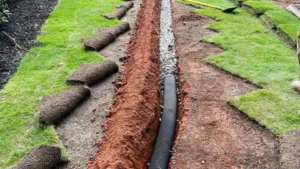
 The simplest way to think about a French drain is that it relieves pressure in areas where water keeps building up. Instead of letting runoff sit in the same part of the yard and keep soaking the soil, the drain captures that water and redirects it. Andy's says this matters in the Austin area because long dry periods can harden the ground, then one strong storm sends runoff across the lot faster than the yard can handle it.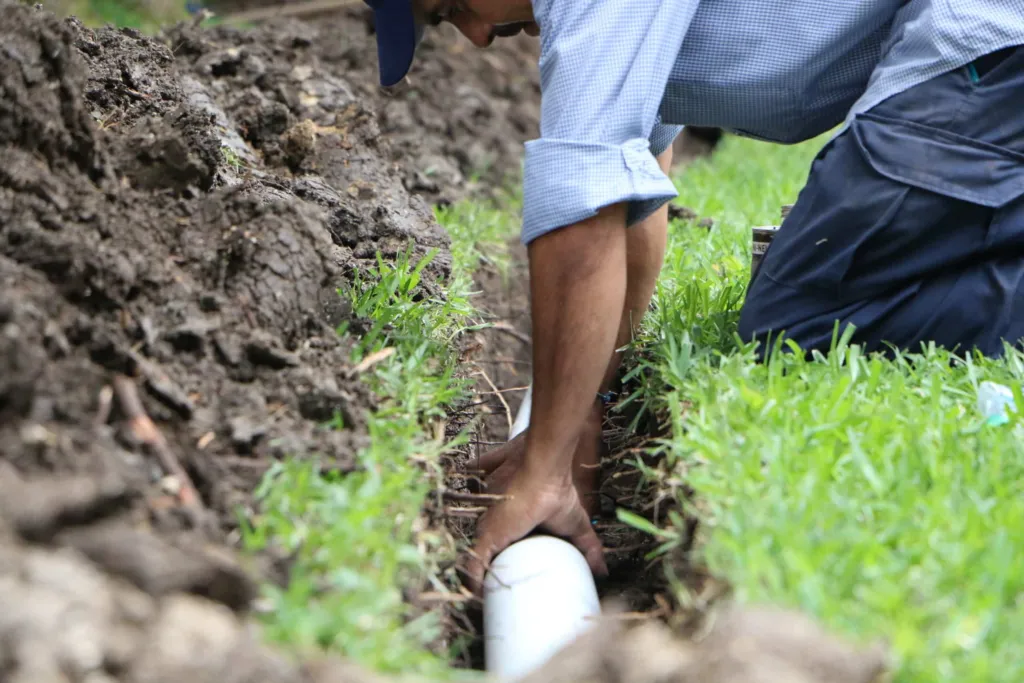
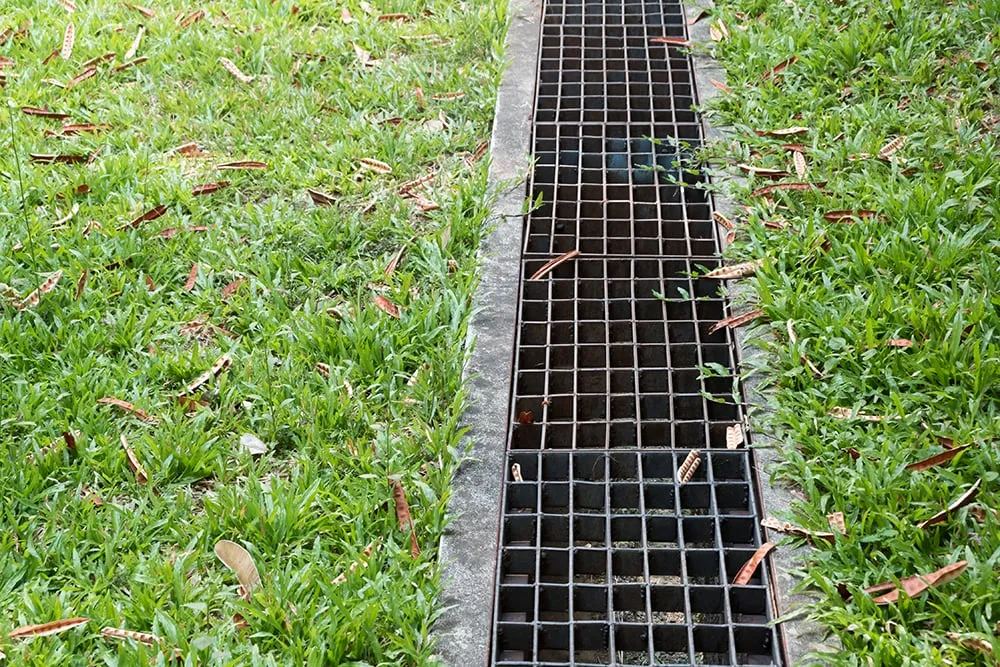
A properly installed drainage system from Andy’s is positioned to prevent soil erosion around the home foundation, prevent standing water that creates slippery surfaces, reduce mosquito issues, protect plants and trees, and prevent the landscape from drowning. Those are direct benefits listed on the Buda page. The French drain page then adds practical yard-level benefits like drier problem spots, better water control, and easier use of the property after storms.
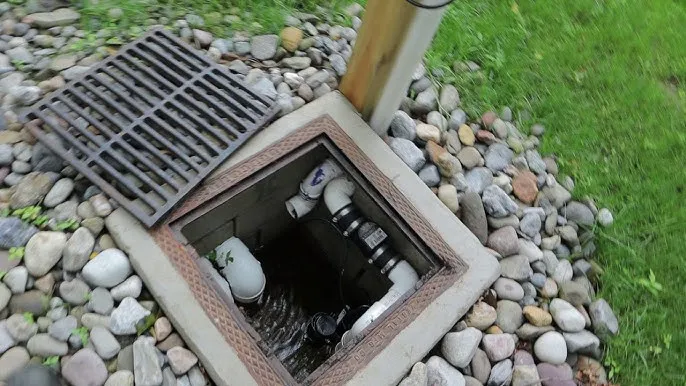
Andy’s says it takes a whole-system approach to Buda lawn landscape drainage and can correct drainage issues by implementing French drains, sump pumps, channel drains, catch basins, and grates. The Austin French drain service page adds more detail by breaking those needs into standard systems, deeper systems, perimeter drains, repairs, tie-ins, and related add-ons.
A standard French drain is often the right fit for shallow drainage problems, low lawn areas, side yards, and places where water tends to sit near the surface after rain. Andy's describes this as one of the most practical solutions for recurring yard saturation.
Some properties need a deeper system because the moisture problem is happening below the surface or because the lot has limited slope. Andy's says deep French drains are often used when water keeps returning and a shallow trench is not enough.
When water is staying too close to the home, a perimeter drain may be the better fit. These systems are designed to help move water away from the structure and reduce repeated moisture buildup around the house.
Sometimes a property already has a drain, but it is clogged, collapsed, or undersized for the amount of water it is handling. Andy's says older systems can fail in exactly those ways, and in those cases repair or replacement may make more sense than trying to work around a bad system.
A single downspout can dump a surprising amount of water into one section of the yard. Andy's says connecting roof runoff into a drainage system is often one of the best ways to keep the same area from getting overwhelmed every time it rains.
Some Buda properties need more than one drainage component to solve the full problem. Depending on the layout, Andy's may recommend channel drains, catch basins, grates, grading adjustments, pop-up emitters, dry wells, or sump components along with the French drain. Andy's Buda page explicitly lists French drains, sump pumps, channel drains, catch basins, and grates as part of its drainage approach.
Andy’s Austin location page describes a four-step flow that starts with a quote, moves into design and planning, then installation, then final completion. The French drain page expands that into property assessment, custom design, installation, and walkthrough.
Step
1
Site Inspection and Drainage Assessment
Andy's starts by looking at how the yard drains after rain, where the water is collecting, how the lot slopes, and which areas are most affected. The goal is to understand the real issue instead of guessing from one visible symptom.
Step
2
Custom Drainage Design
Once the problem areas are clear, the drain path, depth, pipe layout, and discharge point are planned around the property. Andy's says the goal is to create a system that fits the lot and moves water without simply shifting the problem somewhere else.
Step
3
Professional Installation
Installation typically involves trenching, placing gravel and pipe, tying in any needed drainage components, and building the system so it can handle runoff more effectively over time. Andy's also says on the Buda page that it can professionally install a yard drainage system in very little time once the right solution has been determined.
Step
4
Testing and Final Walkthrough
Before the project is wrapped up, the system is checked and reviewed with the homeowner so they understand what was installed and how the drain is designed to work. Andy's Buda page also says its team provides a detailed explanation of the drainage problem along with a written estimate, which reinforces the company's straightforward communication style.
Andy’s repeatedly frames drainage work as custom, not one-size-fits-all. The right system depends on where the water is coming from, how deep the issue goes, and what kind of layout the property has.
Andy’s says it has served the Buda community since 1987, and its Buda drainage page says the local drainage division has more than 30 years of experience helping homeowners prevent flooding and water damage. The company also says it relies on science, not guesswork, takes a whole-system approach, and provides thorough explanations with written estimates.
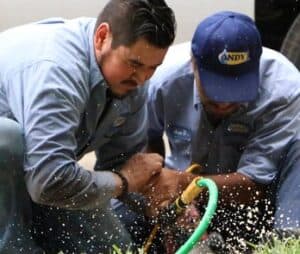
Andy’s Drainage says all the property’s relevant functions and fixtures need to work together for the protection and improvement of property value. That whole-system philosophy fits French drain projects especially well because the visible wet area is not always the full cause of the problem.
Andy’s says one of the most important parts of its work is thoroughness in explaining the drainage issue and giving a written estimate so the customer knows exactly what will be done and what the cost involves. That tone matches the company’s practical, straightforward service voice across the site.
Andy’s serves Buda through its Austin location and the Austin sprinkler repair page specifically lists Buda among the nearby communities it serves along with Kyle, Dripping Springs, and West Lake Hills.
If water keeps collecting in the same area, the lawn stays muddy too long, or runoff is getting too close to the house, a French drain may be the right answer. Andy’s says the best way to know is to look at how the property handles water as a whole.
The cost depends on the size of the project, the depth of the drain, site access, and whether other drainage components are needed. Andy’s says the best approach is to inspect the property and explain the work in a written estimate.
The timeline depends on the size and complexity of the drainage issue and how much trenching or added drainage work is required. Andy’s says it can professionally install yard drainage systems in very little time once the right plan is in place.
Some trenching is part of the process, but the goal is to solve the drainage problem in a controlled way and preserve the overall function of the property. Andy’s also emphasizes clear planning before installation begins.
A French drain handles water below or near the soil surface. A trench drain, also called a channel drain, is installed at the surface to catch fast-moving runoff across concrete or other hardscape areas.
Yes, in many cases you can. Andy’s says this is often one of the best ways to deal with concentrated roof runoff.
Yes, when they are designed properly. Andy’s says Austin-area drainage work must account for local soil, slope, and how the property handles runoff, and its Buda drainage page says the company can determine the problem no matter what type of soil or existing landscaping you have.
There is no one depth that fits every yard. Some drainage problems need only a shallow system, while others need a deeper approach because of the way the lot handles water.
French drains are generally low maintenance, but like any drainage system they should be checked from time to time to make sure water is still moving through the system the way it should.
Yes. Andy’s says that is one of the most common reasons people install one. If water keeps collecting near the home, a French drain can help move it away before it has a chance to keep building up in the same area.
Yes. Andy’s says older systems can clog, collapse, or turn out to be undersized, and in those cases repair or replacement may make more sense than trying to work around a failing drain.
That does not automatically rule out drainage improvements. Andy’s says some lots with limited fall may need a deeper system or even a sum-based solution when gravity drainage alone will not do enough.
If your Buda yard has areas that stay wet, runoff that keeps damaging the landscape, or water collecting too close to the house, it is worth addressing before the next major storm. Andy's offers French drains as part of a whole-system drainage approach built to prevent flooding and water damage and to protect your property value over time. Contact Andy's today to schedule your French drain estimate in Buda and get a drainage solution designed around how your property actually handles water.