We install French drain systems in Austin for homeowners dealing with standing water, oversaturated soil, runoff, and other drainage issues that keep coming back.

Yard Drainage
We install French drain systems in Austin for homeowners dealing with standing water, oversaturated soil, runoff, and other drainage issues that keep coming back.
Call us today to lock in your savings.
Opt into our text messaging system to begin scheduling your service!
A lot of drainage problems start the same way. It rains hard, water collects in one part of the yard, and you assume it will dry out in a day or two. Then it happens again. The same corner stays muddy, the side yard turns soft, mulch washes out, and water starts showing up a little too close to the house. After a while, it becomes clear the problem is not the storm. It is the way the property is handling water.
That is where a French drain can help. The goal is simple: give excess water a place to go before it starts damaging the yard or collecting near the foundation.
Austin properties can be especially tricky because the soil does not always absorb water evenly. Long dry periods can bake the ground hard, and then one strong storm sends runoff across the lot faster than the yard can handle it. Some homes have low spots that trap water. Others have grading issues, heavy roof runoff, or side yards that never seem to dry out. We look at how water is actually moving across the property and build the drainage system around that.
We serve homeowners throughout Austin and nearby communities including Cedar Park, Round Rock, Pflugerville, Lakeway, and Leander.
Homeowners usually start looking into drainage solutions after they notice the same problem more than once. Sometimes it is a backyard that stays soggy after every storm. Sometimes it is water pooling along the side of the house. Sometimes it is a section of lawn that always feels soft, no matter how long it has been since the last rain.
You may need a French drain if water stands in the yard for too long, mulch or soil keeps washing away, or one area turns muddy every time it rains. It can also help if water is collecting near the foundation, around a patio, next to a retaining wall, or anywhere runoff has started to create a pattern.
Another common sign is a side yard that never fully dries out. These narrow areas often do not get enough sun or airflow, so water lingers longer and the drainage problem becomes more obvious over time.
When water keeps collecting near the home, it is usually a sign that runoff needs a better route. A French drain helps redirect that water before it continues building up in the same area.
Nobody wants part of the yard to stay unusable after every storm. A drainage system can help low or soft areas dry out faster and make the lawn more manageable.
Runoff can strip mulch, move soil, and wear out flower beds surprisingly fast. Capturing that water before it gains momentum helps preserve the look and structure of the landscape.
Grass and plants struggle when the soil stays too wet. Better drainage can help the yard recover faster after rain and create a healthier balance for turf and planting beds.
A yard with fewer muddy spots is easier to walk through, easier to maintain, and generally more enjoyable. Good drainage also helps reduce the standing water that attracts insects and leaves areas slick after storms.
Not every drainage issue calls for the same setup. The system depends on where the water is coming from, how deep the problem goes, and what kind of layout the property has.
A standard French drain is often the right answer for yards with shallow drainage problems. It works well in low lawn areas, side yards, and places where water tends to sit near the surface after rain.
Some properties need a deeper system because the water problem is happening below the surface or because the lot has limited slope. Deep French drains are often used where moisture keeps returning and a basic shallow trench would not be enough.
When water is staying too close to the home, a perimeter drain may be the better fit. These systems are designed to help move water away from the structure and reduce repeated moisture buildup around the house.
Sometimes the property already has a drain, but it is no longer doing the job. Older systems can clog, collapse, or turn out to be undersized for the amount of water they are handling. In those cases, repair or replacement can make more sense than trying to work around a failing system.
A single downspout can dump a surprising amount of water into one spot. Connecting roof runoff into a drainage system helps spread out that load and keeps the same area from getting overwhelmed every time it rains.
Some yards need more than one piece to solve the problem. Depending on the layout, we may recommend a catch basin, channel drain, dry well, pop-up emitter, grading adjustment, or another drainage component along with the French drain.
Step
1
Site Inspection and Drainage Assessment
We start by looking at how the yard drains after rain, where the water is collecting, how the lot slopes, and what areas are most affected. That helps us understand the real issue instead of guessing from one obvious symptom.
Step
2
Custom Drainage Design
Once the problem areas are clear, we map out the system around the property. That includes the drain path, depth, pipe layout, and discharge point. The goal is to create a system that fits the lot and moves water without shifting the problem somewhere else.
Step
3
Professional Installation
Installation typically involves trenching, placing gravel and pipe, tying in any needed drainage components, and building the system so it can handle runoff more effectively over time.
Step
4
Testing and Final Walkthrough
Before the project is wrapped up, the system is checked and reviewed. We also walk the property with the homeowner so they understand what was installed and how the drain is designed to work.

We help solve recurring standing water, soggy lawns, runoff near the foundation, soft side yards, overflowing downspouts, erosion in planting beds, patio drainage problems, driveway runoff, and other water issues that keep coming back after storms.
If water keeps collecting in the same area, the lawn stays muddy too long, or runoff is getting too close to the house, a French drain may be the right answer. The best way to know is to look at how the property handles water as a whole.
It depends on the size of the project, how deep the system needs to go, and whether additional drainage features are needed. A simple yard drain costs less than a more involved system with downspout tie-ins or deeper excavation.
That depends on the scope of the work. Some drainage projects are fairly straightforward, while others take longer because of depth, site access, or the need for multiple drainage components.
There is some disruption because trenching is part of the process, but the work is planned carefully. The point is to solve the water issue without creating more damage than necessary.
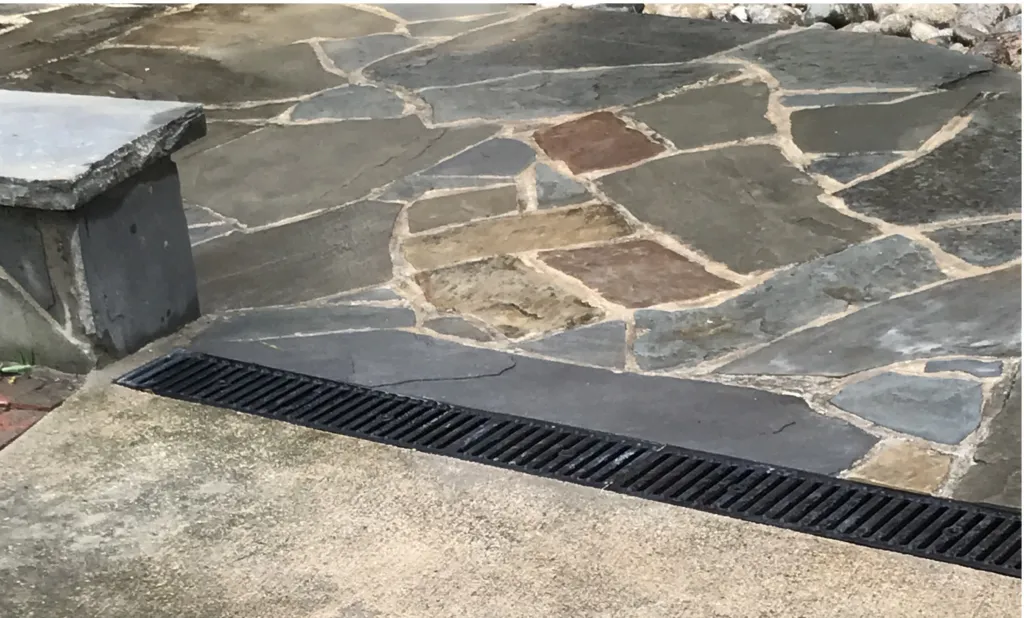
A French drain handles water below or near the soil surface. A trench drain, also called a channel drain, is installed at the surface to catch fast-moving runoff across concrete or other hardscape areas.
Yes, in many cases they can. That is often one of the best ways to deal with concentrated roof runoff.
They can work very well when they are designed properly. In Austin, the key is accounting for clay soil, runoff patterns, and where the water can discharge safely.
There is no one depth that fits every yard. Some drainage problems only need a shallow system. Others need a deeper approach because of the way the lot handles water.
They are generally low maintenance, but like any drainage system, they should be checked from time to time to make sure water is still moving through the system the way it should.
Yes, that is one of the most common reasons people install one. If water keeps collecting near the home, a French drain can help move it away before it has a chance to keep building up in the same area.
Yes. If a drain is no longer working, we can inspect it and determine whether it needs repair, rerouting, or replacement.
Flat lots can still be drained, but the system usually needs more careful planning. In some cases, that means a deeper drain or added components to help move the water effectively.
If your yard has areas that stay wet, water keeps collecting near the house, or runoff is starting to damage the landscape, it is worth addressing before the next round of storms. A properly planned French drain can help dry out problem spots and give excess water a controlled path away from your property. Schedule your French drain estimate in Austin, TX today.