Andy’s Austin French drain page presents French drains as a practical solution for standing water, soggy lawns, runoff near the foundation, and recurring yard drainage problems across Central Texas.


Yard Drainage Experts
Andy’s Austin French drain page presents French drains as a practical solution for standing water, soggy lawns, runoff near the foundation, and recurring yard drainage problems across Central Texas.
Call us today to lock in your savings.
Opt into our text messaging system to begin scheduling your service!
When heavy rain hits Georgetown, drainage problems can show up fast. Andy’s Georgetown page says sudden downpours and continual rainfall can flood landscaping areas, and it positions the company as a long-running local provider of sprinkler, drainage, and lighting services in the area.
A French drain is one of the most effective ways to move excess water away from the parts of your property that keep getting overwhelmed.
A French drain is a subsurface drainage system designed to collect and redirect excess water away from problem areas. Andy’s explains that these systems typically use a perforated pipe inside a gravel-filled trench so water can filter in and move toward a safe discharge point.
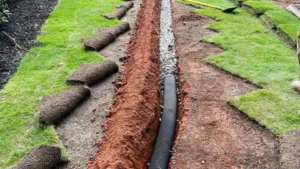
 Instead of letting runoff sit in one section of the yard and keep saturating the soil, a French drain captures that water and redirects it. Andy's says this matters in the Austin area because the ground can swing from dry and hardened to overwhelmed after strong storms.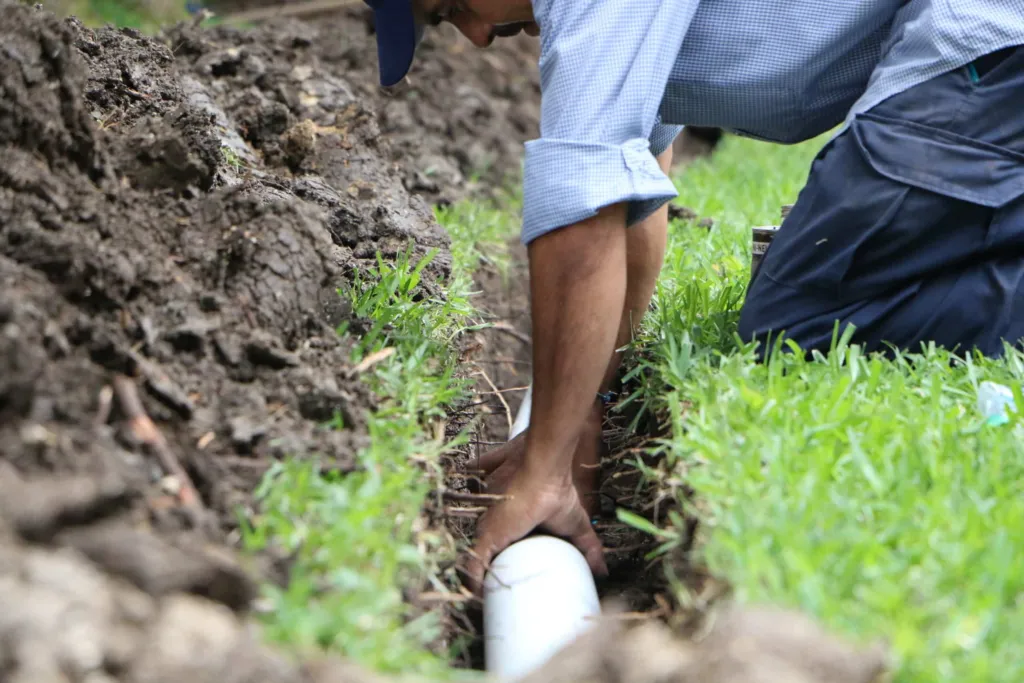
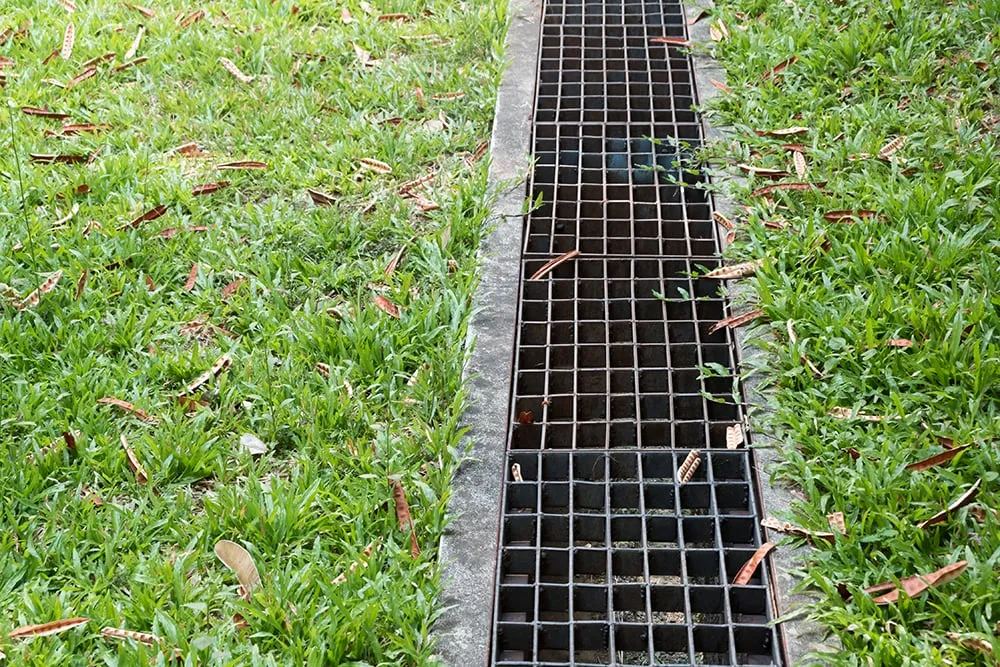
Andy’s says its drainage systems help prevent soil erosion around the foundation, standing water, mosquito infestation, and landscape damage. A French drain fits that benefit set especially well when the core issue is recurring yard saturation.
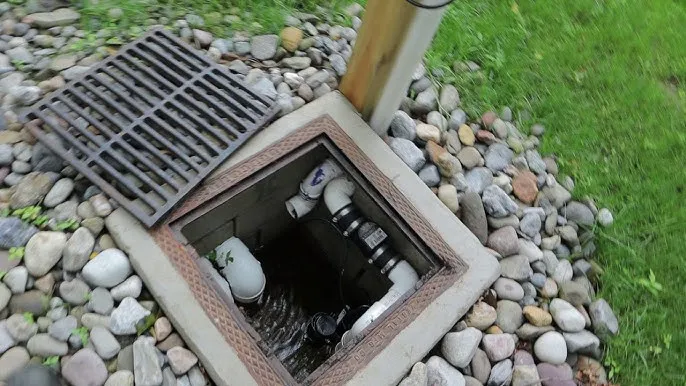
Andy’s says its Georgetown drainage division takes a whole-system approach and can correct drainage issues by implementing French drains, sump pumps, channel drains, catch basins, and grates. Its Austin French drain page adds detail around standard systems, deeper systems, perimeter drains, repairs, and tie-ins.
A standard French drain is often the right fit for shallow drainage problems, low lawn areas, and side yards where water sits near the surface after rain. Andy's presents standard French drains as one of the most practical solutions for recurring yard saturation.
Andy's says some properties need a deeper system because the water problem is happening below the surface or because the lot has limited slope. That makes deep French drains a better fit when a shallow trench is not enough.
When water is staying too close to the home, a perimeter drain may be the better solution. Andy's ties this kind of drainage work directly to moving water away from the house and reducing recurring moisture at the structure.
Andy's says older drainage systems can clog, collapse, or turn out to be undersized. In those situations, repairing or replacing the existing system may make more sense than trying to work around a drain that is no longer doing the job.
Andy's specifically notes that downspout tie-ins can be an effective way to keep concentrated roof runoff from overwhelming the same small part of the yard over and over again.
Depending on the property layout, the best drainage solution may also involve channel drains, catch basins, grates, dry wells, pop-up emitters, grading adjustments, or sump-based components. Georgetown's local page explicitly includes several of those systems in its drainage offering.
Andy’s Austin pages use a simple service flow that starts with a quote and plan, then moves to scheduling and completion. Its French drain page expands that into a drainage-specific process built around inspection, custom design, installation, and review.
Step
1
Site Inspection and Drainage Assessment
Andy's starts by looking at how the yard handles water, where runoff is collecting, how the lot slopes, and what areas are most affected.
Step
2
Custom Drainage Design
Once the trouble spots are clear, the drain route, depth, and discharge strategy are planned around the property. Georgetown's local page says Andy's relies on science, not guesswork, and that all relevant fixtures and functions need to work together.
Step
3
Professional Installation
Professional InstallationAndy's says installation typically involves trenching, placing the drainage pipe and gravel, and tying in any needed components so water moves away from the problem area more effectively.
Step
4
Testing and Final Walkthrough
Testing and Final WalkthroughAndy's says one of the most important parts of the job is thoroughly explaining the drainage issue and providing a written estimate, which supports a final walkthrough where the homeowner understands what was installed and why.
Andy’s makes clear that not every drainage issue uses the same setup. The right French drain depends on where the water is coming from, how deep the issue goes, and what type of lot the property has.
Andy’s says it has served the Georgetown community since 1987, and the company’s Austin location pages highlight experienced technicians, quality materials, transparent pricing, and a money-back guarantee. Georgetown’s page also says each drainage system is designed by a college-educated engineer.
On the Georgetown local page, Andy’s says each drainage system it installs is designed by a college-educated engineer. That is especially relevant for French drains, where layout and water flow matter just as much as the installation itself.
Andy’s says its Georgetown drainage team takes a whole-system approach and can determine the issue regardless of soil type or existing landscaping. That local, property-specific mindset is a strong fit for homeowners who want more than a generic drainage fix.
Andy’s says it provides service in Georgetown, TX, through its Austin-area operation, and the Georgetown page specifically identifies ZIP codes 78626, 78627, 78628, 78633, and 78673.
Andy’s says you may need one if water stands in the yard too long, mulch or soil keeps washing away, or runoff is collecting near the foundation, patio, retaining wall, or side yard.
The cost depends on the size of the project, the depth, the site layout, and whether additional drainage components are needed. That follows from Andy’s custom drainage design process.
The timeline depends on the size and complexity of the drainage issue and how much trenching or related work is involved. Andy’s positions installation around a custom plan rather than a one-size-fits-all setup.
Some trenching is part of the installation, but the goal is to solve the drainage issue while preserving the long-term function of the property.
Andy’s says French drains handle water in the soil or broad yard saturation, while trench or channel drains handle surface runoff across hardscapes.
Yes. Andy’s specifically includes downspout drainage tie-ins as part of its French drain approach.
Yes, when they are designed around the property. Andy’s says it can determine the drainage problem no matter the soil type or existing landscaping.
Andy’s says some properties only need a standard system, while others require a deeper drain because of heavier saturation or limited slope.
French drains are generally low-maintenance, but Andy’s notes that older systems can fail if they clog or collapse, so periodic checks are smart.
Yes. Andy’s specifically ties French drains to moving water away from the home and reducing repeated moisture near the structure.
Yes. Andy’s says repair or replacement can be the right answer when an older system is clogged, collapsed, or undersized.
Andy’s says some lots with limited fall may need a deeper system or even a sump-based solution when gravity drainage alone is not enough.
If your Georgetown yard has wet areas that linger too long, runoff that keeps damaging the landscape, or water collecting too close to the house, it is worth solving before the next storm. Andy's offers drainage solutions built around the property's actual water behavior and layout. Contact Andy's today to schedule your French drain estimate in Georgetown.