French drain installation in Celina, TX for wet yards, standing water, runoff control, and foundation drainage. Custom solutions built for local soil conditions.

Yard Drainage
French drain installation in Celina, TX for wet yards, standing water, runoff control, and foundation drainage. Custom solutions built for local soil conditions.
Call us today to lock in your savings.
Opt into our text messaging system to begin scheduling your service!
A drainage problem does not always start with a dramatic flood. On many Celina properties, it shows up in quieter ways. Water sits in the same corner of the yard after every rain. A side yard stays muddy for days. Mulch washes out of the beds, or runoff starts collecting near the house when storms move through. Once that pattern starts, it usually keeps repeating until the property has a better way to move water out.
Our French drain installation services in Celina are built for homeowners dealing with exactly that kind of issue. A properly designed French drain can help collect excess water below the surface and redirect it away from trouble spots before it causes more damage. That can mean a drier lawn, less erosion, better use of the yard, and less water lingering near the foundation.
Celina continues to grow, and many homes sit on lots where grading, runoff, and clay-heavy soil all affect how water drains. We design each system based on the actual layout of the property, including low areas, discharge paths, downspouts, and the way rainwater moves across the lot. That gives homeowners a drainage solution that fits the site instead of a generic fix that only works for a while.
Many drainage issues start small enough that homeowners put them off. The problem is that repeated moisture rarely improves on its own.
You may need a French drain if your yard develops standing water after storms, certain areas stay soft and muddy, or runoff keeps collecting near the home. Other signs include washout in flower beds, downspouts dumping too much water into one spot, and lawn sections that never seem to dry as quickly as the rest of the yard.
Some Celina homeowners also notice water along property lines, low spots in newer sod, erosion near patio edges, or damp side yards that remain difficult to mow or maintain. These are all signs that the property may need a better subsurface drainage path.
When water continues to gather near the house, it can leave the surrounding soil overly saturated. A French drain helps move that water away so it is less likely to linger close to the structure.
Low spots and soggy areas can make a yard difficult to use and maintain. A drainage system helps those sections dry out faster and stay more consistent after rain.
Runoff can wear down the yard over time by pulling mulch, washing out beds, and cutting through soft soil. French drains help intercept that water before it starts stripping material away.
Grass and plant roots usually do better when the soil has a more balanced moisture level. Too much water can be just as harmful as too little. Better drainage helps create a healthier growing environment.
A yard with fewer muddy areas is easier to mow, easier to walk through, and more enjoyable after storms. That simple improvement often makes a big difference in day-to-day use.
Different drainage problems call for different solutions. Some properties need a straightforward drain line in one wet section, while others need a more complete system.
Standard French drains are commonly used for yards, side yards, and planting areas where water collects close to the surface. These systems are often the right choice for recurring soft spots and mild to moderate yard drainage issues.
Some lots need a deeper system because moisture is building below the surface or because the site conditions make a shallow drain less effective. A deep French drain may be recommended when water keeps returning despite surface improvements.
If the main concern is water near the home, a perimeter-style drain may be the better fit. These systems are intended to help direct moisture away from the structure and reduce repeated wetness around the foundation.
Not every property needs a brand-new system. In some cases, an existing French drain has become clogged, collapsed, or was never laid out properly for the way the yard drains. Repair or replacement may be the better answer when an older system is no longer doing its job.
Roof runoff can create drainage problems faster than many homeowners expect. Tying downspouts into an underground drainage system helps move that water away instead of dumping it into the same area after every storm.
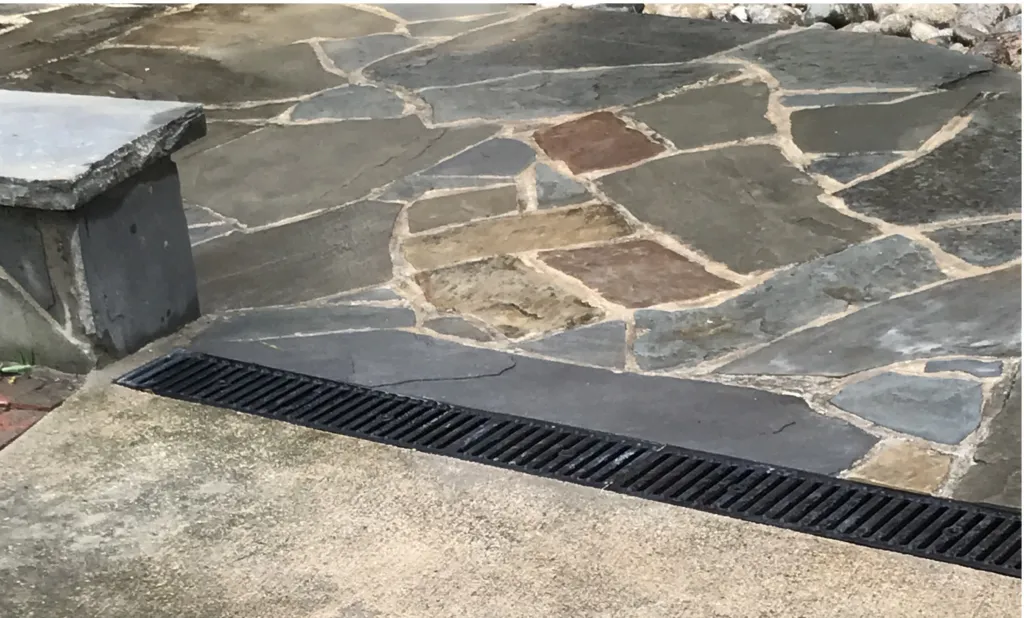
Some Celina properties benefit from combining a French drain with other drainage features. Depending on the lot, that might include catch basins, channel drains, pop-up emitters, grading adjustments, or sump-assisted discharge.
Step
1
Site Inspection and Drainage Assessment
We begin by looking at where the water originates, where it collects, how the lot slopes, and where the water can safely be discharged. That helps us determine whether a French drain is the best fit for the property.
Step
2
Custom Drainage Design
Once the drainage pattern is understood, we map out the system. That includes trench path, depth, materials, pipe route, and discharge location based on the lot layout.
Step
3
Professional Installation
Installation may include trenching, gravel placement, perforated pipe installation, filter fabric, and tie-ins to other drainage components where needed. The goal is to create a system that actually changes how the property handles water.
Step
4
Testing and Final Walkthrough
Before wrapping up, the system is checked to confirm water can move through it properly. We also review the completed layout with the homeowner and explain what to expect going forward.

We help Celina homeowners with standing water in the yard, soggy grass, runoff near the foundation, drainage issues along fences, wet side yards, patio runoff, overflowing downspout areas, muddy low spots, and recurring erosion in planting beds and landscaped sections.
If water keeps pooling in the same part of the yard, the lawn stays muddy, or runoff repeatedly collects near your home, a French drain may be the right solution. A drainage assessment can determine whether the issue is surface runoff, subsurface moisture, or both.
The cost depends on the size of the property, the length and depth of the drain, soil conditions, and whether other drainage features are needed. A smaller yard system is usually less involved than a larger drainage project tied into multiple runoff sources.
That depends on the scope of the work. Some systems can be installed relatively quickly, while more involved projects may take longer because of trench depth, lot layout, or added drainage components.
There will be some disruption in the work area because trenching is part of the process. The system is planned carefully to solve the drainage issue while limiting unnecessary impact to the surrounding yard.
A French drain collects water below or near the soil surface and carries it underground through perforated pipe. A trench drain, often called a channel drain, is installed at the surface to catch fast-moving runoff across hardscapes.
Yes, in many cases they can. This is a common way to deal with concentrated roof runoff and keep water from collecting too close to the home.
Yes, but they need to be designed properly. Because Celina soil tends to drain slowly, the system needs the right depth, slope, and discharge route to perform well.
There is no one-size-fits-all depth. Some yards need a shallow system for surface wetness, while others need a deeper installation to address more persistent moisture or runoff near the house.
They are generally low maintenance, but it is still important to check the outlet from time to time and make sure the system remains clear and draining properly.
Yes. One of the main reasons homeowners install a French drain is to help move water away from the house and reduce recurring moisture near the foundation.
Yes. If an older drain is failing or no longer handling water the way it should, we can inspect it and recommend repair, rerouting, or replacement.
Flat lots often need a more carefully designed drainage system. In some cases, that may include deeper trenching, added collection points, or a pumped solution to help the water move.
If your yard stays wet after storms or water keeps showing up in the same trouble spots, it is worth addressing before the problem spreads. A custom French drain system can help improve yard drainage, reduce runoff issues, and move excess water away from the areas you want to protect. Schedule your French drain estimate in Celina, TX today.