We install French drain systems in Lubbock for homeowners dealing with soggy grass, erosion, side-yard drainage issues, and runoff that keeps gathering where it should not.

Yard Drainage
We install French drain systems in Lubbock for homeowners dealing with soggy grass, erosion, side-yard drainage issues, and runoff that keeps gathering where it should not.
Call us today to lock in your savings.
Opt into our text messaging system to begin scheduling your service!
A lot of homeowners in Lubbock do not think about drainage until one storm leaves the yard holding water in all the wrong places. A low spot stays muddy. Water gathers near the patio. Mulch shifts out of the beds. The side yard turns soft, and runoff starts pushing toward the house instead of away from it. Even in a drier part of Texas, those problems can show up fast when a hard rain hits ground that is not set up to drain well.
That is where a French drain can help. It gives excess water a clear route out of the yard instead of letting it sit, spread, or keep returning to the same trouble spots. We install French drain systems in Lubbock for homeowners dealing with standing water, erosion, soggy sections of lawn, and runoff that does not have a proper exit path.
West Texas properties come with their own set of drainage challenges. Dry periods can leave the soil hard, compacted, and slow to absorb water. Then a sudden storm sends runoff across the lot faster than the yard can handle it. A good drainage solution has to account for that pattern and match the way the property really behaves when rain shows up.
Some drainage problems stand out right away. Others show up the same way every time it rains until it becomes clear the yard needs help.
You may need a French drain if water keeps pooling in one part of the lawn, the soil stays soft longer than it should, or runoff keeps collecting near the foundation. Other common signs include washout in flower beds, muddy side yards, low spots that stay wet, and downspouts that release too much water into one section of the property.
In Lubbock, homeowners also notice erosion along slopes, water gathering at the bottom of a yard after a storm, or bare areas in turf where repeated runoff keeps disturbing the soil. These are usually signs that the property needs better subsurface drainage, not just surface cleanup.
When runoff keeps collecting near the house, it can leave the surrounding soil wetter than it should be. A French drain helps carry that moisture away before it continues settling in the same place.
Wet areas can make a lawn difficult to use and difficult to maintain. A French drain helps those sections dry faster and cuts down on the repeated pooling that keeps coming back after rain.
In Lubbock, runoff can move quickly when the ground is dry and hard. A drainage system helps intercept that water before it washes through beds, edges, and lower sections of the lot.
Grass and plants usually do better when the soil is not swinging between too dry and too saturated. Better drainage helps create more stable conditions after a storm.
A drier yard is easier to mow, easier to walk through, and less frustrating to deal with after heavy rain. It also means fewer muddy spots and fewer areas that stay soft for too long.
No two drainage problems are exactly alike. The right system depends on how the yard handles water and where the trouble is showing up.
Standard French drains are often the right fit for common yard drainage issues, especially where water keeps collecting near the surface. These systems work well in lawns, side yards, and landscaped areas.
Some properties need a deeper drain because the water issue extends below the surface or because the site conditions make a shallow system less effective. Deep French drains are often used when moisture keeps returning despite other drainage improvements.
When water is collecting near the home, a perimeter drain may be the better option. These systems are designed to help move water away from the structure and reduce repeated wetness around critical areas.
Not every drainage issue calls for a new system from scratch. In some cases, there is already a French drain on the property, but it is clogged, damaged, crushed, or simply not designed well for the amount of water it needs to handle.
Downspouts can unload a large amount of water into one small section of the yard. Tying them into a drainage system helps carry roof runoff away so it does not keep flooding the same area.
Some Lubbock properties need more than one drainage feature working together. Depending on the lot, that could include catch basins, channel drains, pop-up emitters, grading changes, or a sump-assisted solution.
Step
1
Site Inspection and Drainage Assessment
We begin by looking at where the water starts, where it moves, and where it settles. That includes low spots, runoff sources, lot slope, and possible discharge paths.
Step
2
Custom Drainage Design
Once the drainage pattern is clear, we design a system that fits the yard. That includes trench location, depth, pipe routing, drainage material, and how the water will leave the problem area.
Step
3
Professional Installation
Installation may include trenching, gravel placement, perforated drain pipe, filter fabric, and tie-ins to downspouts or related drainage features. The goal is to solve the issue without pushing water into a new trouble spot.
Step
4
Testing and Final Walkthrough
Before the job is wrapped up, the system is checked to make sure water can move through it properly. We also review the finished layout with the homeowner and explain what to monitor over time.

We help Lubbock homeowners with standing water in the yard, runoff near the foundation, muddy low spots, erosion in flower beds, wet side yards, overflowing downspout areas, patio drainage issues, and recurring water problems after heavy rain.
If water keeps pooling in the same part of your yard, runoff settles near the house, or the lawn stays muddy after rain, a French drain may be the right solution. A drainage inspection can help confirm whether the issue is surface runoff, subsurface moisture, or both.
The cost depends on the size of the drainage issue, the length and depth of the drain, and whether other drainage features are needed. A smaller yard system is usually less involved than a larger project near the home or across multiple runoff areas.
That depends on the property and the scope of the work. Some drainage projects are fairly straightforward, while others take longer because of lot layout, trench depth, soil conditions, or added drainage components.
There is some temporary disruption because trenching is part of the work. The system is planned carefully so the drainage issue is solved while keeping unnecessary impact to the rest of the yard as limited as possible.
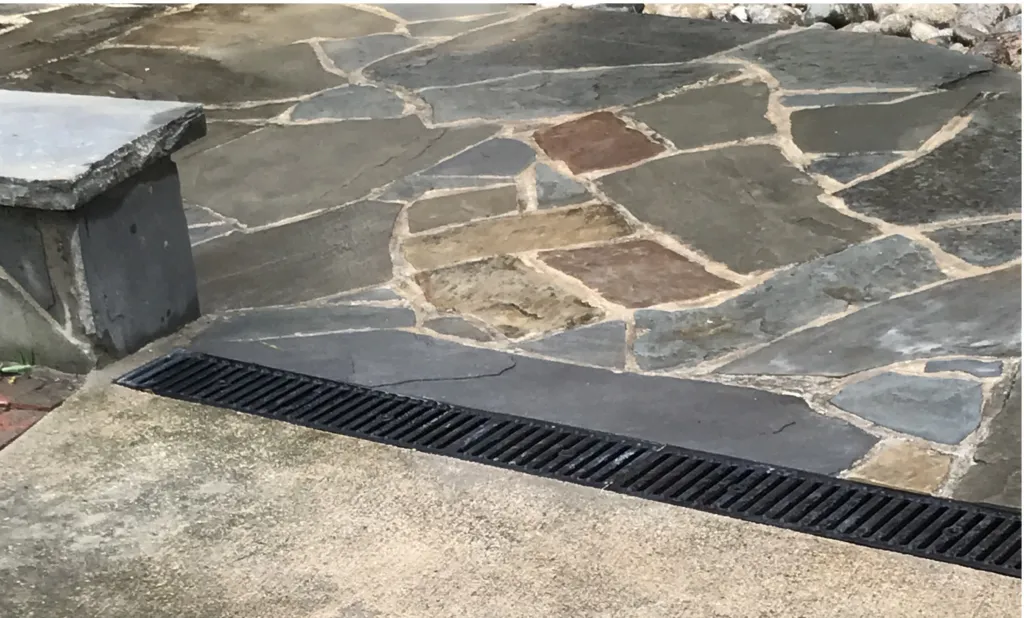
A French drain collects water below or near the soil surface and moves it underground through perforated pipe. A trench drain, also called a channel drain, is installed at the surface to catch water flowing across hardscapes.
Yes, in many cases they can. This is a common way to move concentrated roof runoff away from the home and keep it from collecting in one section of the yard.
Yes, but they need to be designed correctly. In Lubbock, dry soil, sudden storms, and erosion-prone runoff make proper slope, depth, and discharge planning especially important.
That depends on the lot and the drainage issue. Some yards only need a shallow system for surface water, while others need a deeper drain because of more persistent saturation or runoff near the house.
They are generally low maintenance, but it is still smart to check the outlet occasionally and make sure the system keeps draining the way it should.
Yes. One of the main reasons homeowners install a French drain is to help move water away from the house and reduce repeated moisture near the foundation.
Yes. If an older drain is no longer working correctly, we can inspect it and recommend repair, rerouting, or replacement based on its condition.
Flat yards often need a more carefully planned drainage design. In some cases, that may include deeper trenching, extra collection points, or a sump-assisted option to help move water effectively.
If your yard keeps holding water after storms or runoff is starting to damage the lawn and landscape, it is worth fixing before the problem gets worse. A properly designed French drain can help your property drain more effectively and keep water away from the areas you want to protect. Schedule your French drain estimate in Lubbock, TX today.